Working the night shift changes more than just your sleep schedule—it changes your relationship with food.
When most people are enjoying breakfast with their morning coffee, you might be driving home from work, getting ready for bed, or just starting your day. After a long shift, cooking is usually the last thing you feel like doing. That’s why so many night shift workers end up relying on vending machines, fast food, or whatever is quickest to grab.
If you’ve worked nights for any length of time, you’ve probably experienced it yourself. You head into work with good intentions, but by the middle of the shift you’re reaching for another coffee or a sugary snack because it’s convenient. I’ve found that the biggest challenge isn’t knowing what healthy foods to eat—it’s having the energy to prepare them when you’re already exhausted.
That’s exactly what this article is about.
Healthy eating doesn’t have to mean spending an hour in the kitchen before work. Having a handful of simple breakfasts that fit your schedule can make staying energized much easier, even during long overnight shifts.
Why Breakfast Still Matters on the Night Shift
One question many night shift workers ask is whether breakfast even matters if they’re awake while everyone else is sleeping.
The answer is yes—but “breakfast” simply means your first meal after waking up.
Whether you wake at 5 a.m. or 5 p.m., your body still needs quality nutrition to fuel the hours ahead.
A balanced breakfast can help:
- Keep your energy more consistent throughout your shift.
- Reduce the temptation to snack on sugary foods.
- Help you stay fuller for longer.
- Support better concentration during demanding work.
Instead of focusing on the time on the clock, focus on building a meal that includes protein, fiber, healthy fats, and slow-digesting carbohydrates.
1. Overnight Oats with Greek Yogurt
If convenience is your priority, it’s hard to beat overnight oats.
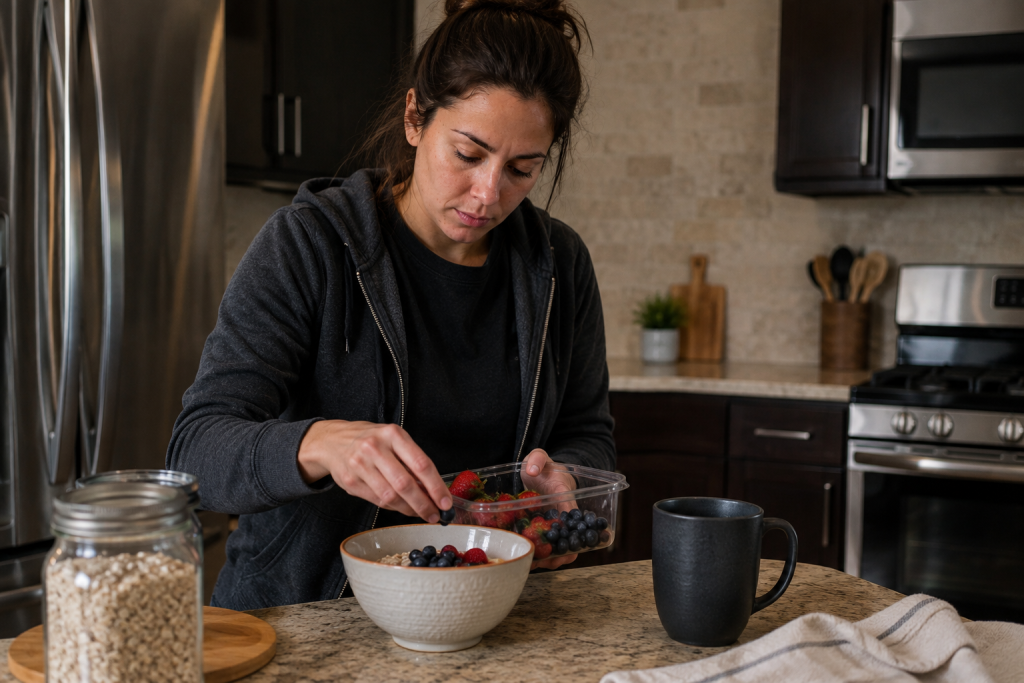
Before going to bed, combine rolled oats, plain Greek yogurt, milk, chia seeds, and a little cinnamon in a container. Leave it in the refrigerator and breakfast is ready when you wake up.
Top it with fresh berries, sliced banana, walnuts, or almonds before eating.
Why it works
The oats provide steady energy, while the Greek yogurt adds plenty of protein to help keep you full throughout the first part of your shift.
FuelAfterFive Tip: Make several jars at once so breakfast is already prepared for multiple workdays.
2. Egg and Avocado Toast
Some breakfasts stay popular for a reason.
Whole-grain toast topped with mashed avocado and two eggs is simple, filling, and packed with nutrients.
Serve it with fruit or sliced tomatoes to round out the meal.
Why it works
Eggs provide high-quality protein, while avocado offers healthy fats that help you feel satisfied longer. Together they create a balanced breakfast without requiring much effort.
3. Make-Ahead Breakfast Burritos
One thing I’ve learned is that future-you will always appreciate a meal that’s already made.
Breakfast burritos are perfect for meal prep.
Fill whole-wheat tortillas with scrambled eggs, turkey sausage, bell peppers, onions, spinach, and a little shredded cheese if you enjoy it. Wrap them individually and freeze.
When you’re heading out the door, microwave one for a few minutes and breakfast is ready.
Why it works
You only cook once, but you’ll have several breakfasts waiting for busy workdays.
4. Greek Yogurt Power Bowl
Some days you want something light but filling.
Start with plain Greek yogurt and add your favorite toppings:
- Blueberries
- Strawberries
- Granola
- Walnuts
- Pumpkin seeds
- A drizzle of honey if you’d like a little sweetness
Why it works
Greek yogurt is naturally high in protein, while fruit and nuts add fiber, vitamins, and healthy fats for more lasting energy.
5. Peanut Butter and Banana Toast
Healthy breakfasts don’t have to be complicated.
Spread natural peanut butter on whole-grain toast and top it with sliced banana. Sprinkle a little cinnamon on top if you have it.
Why it works
This meal takes less than five minutes, costs very little, and provides a good balance of carbohydrates, healthy fats, and protein.
It’s also easy to make even when you’re running late.
6. Cottage Cheese Breakfast Bowl
Cottage cheese has become one of the easiest ways to add protein to breakfast.
For a sweeter version, top it with berries, peaches, or pineapple.
If you prefer savory foods, add cucumber, tomatoes, cracked black pepper, and everything bagel seasoning.
Why it works
It’s filling without being overly heavy, making it a great choice whether you’re starting work or winding down after your shift.
7. Veggie Egg Muffins
Egg muffins are another meal prep favorite because they’re portable and easy to reheat.
Whisk eggs together with chopped spinach, peppers, onions, mushrooms, and any other vegetables you enjoy.
Bake them in a muffin tin and store them in the refrigerator for several days.
Why it works
You can grab two or three on your way out the door, making breakfast almost effortless.
8. High-Protein Smoothie
Not everyone wants a full meal after waking up.
On those days, a smoothie can be a great alternative.
Blend together:
- Milk
- Greek yogurt
- Frozen berries
- Banana
- Spinach
- Peanut butter
- Protein powder (optional)
Why it works
It’s portable, refreshing, and an easy way to include fruit, vegetables, and protein in one meal.
9. Warm Oatmeal with Apples and Almonds
Sometimes a warm breakfast is exactly what you need.
Cook rolled oats and stir in diced apples, cinnamon, chopped almonds, and ground flaxseed.
Why it works
Oats provide slow-digesting carbohydrates that help deliver more consistent energy than sugary breakfast cereals.
10. Breakfast Sandwiches You Can Freeze
Homemade breakfast sandwiches can save both time and money.
Use whole-grain English muffins with eggs, lean turkey sausage or ham, spinach, and a slice of cheese.
Wrap each sandwich individually before freezing.
Why it works
Instead of stopping at a drive-thru, you’ll have a balanced breakfast ready in just a few minutes.
Common Breakfast Mistakes Night Shift Workers Make
Even healthy foods can’t do much if your overall routine is working against you.
Here are a few habits worth paying attention to.
Depending only on caffeine
Coffee can absolutely help you stay alert, but it works best alongside a balanced meal. Relying on caffeine alone often leads to an energy crash later in the shift.
Skipping breakfast altogether
When you’re tired, it’s tempting to tell yourself you’ll eat later.
The problem is that later often turns into grabbing chips, candy, or fast food because you’re starving.
Choosing meals that are too heavy
Large, greasy breakfasts may leave you feeling sluggish instead of energized.
Aim for meals that satisfy you without making you feel overly full.
Forgetting to drink water
Night shifts make it surprisingly easy to drink several cups of coffee and almost no water.
Staying hydrated supports both energy and concentration throughout your shift.
Meal Prep Makes Everything Easier
If there’s one habit that’s made healthy eating easier for me, it’s preparing a few basics ahead of time.
I used to think meal prep meant spending an entire Sunday cooking dozens of meals. In reality, even preparing a few breakfast staples can save you a lot of time during the week.
Some of my favorites include:
- Hard-boiled eggs
- Overnight oats
- Fresh fruit
- Washed vegetables
- Greek yogurt
- Whole-grain bread
- Frozen breakfast burritos
- Egg muffins
Having these ready means you’re making one decision when you have energy instead of ten decisions when you’re exhausted.
What I’ve Learned From Busy Workdays
One thing I’ve noticed after long workdays is that motivation usually isn’t the problem.
Energy is.
It’s easy to have good intentions while grocery shopping or scrolling through healthy recipes online. The real test comes after a long shift when you’re tired and just want something quick.
I’ve found that the breakfasts I actually stick with are the simple ones. Meals that take five minutes instead of thirty are much more likely to become part of a routine.
Healthy eating shouldn’t feel like another job after work. It should make life easier, not more complicated. If you can find two or three breakfasts that you genuinely enjoy and keep the ingredients on hand, you’ll probably be far more consistent than trying to make a different recipe every single day.
Progress almost always comes from habits you can repeat—not meals that are perfect once.
Reality Check
No one eats perfectly every day.
There will be mornings when you’re too tired to cook, days when your schedule changes unexpectedly, and nights when convenience wins.
That’s completely normal.
Healthy eating isn’t about preparing picture-perfect breakfasts every day of the week. It’s about making better choices more often than not.
Even replacing a fast-food breakfast with overnight oats a few times each week is a step in the right direction.
Small improvements may not seem exciting in the moment, but they’re often the habits that last the longest.
Conclusion
Working nights isn’t easy, and your meals shouldn’t add more stress to an already demanding schedule.
The best breakfast isn’t the most complicated one or the trendiest recipe online. It’s the one that fits your routine well enough that you’ll actually make it again tomorrow.
Start with one or two ideas from this list, prepare them ahead of time when you can, and build from there.
Healthy habits don’t happen overnight. They grow from small, practical choices that fit real life—and for busy professionals, that’s exactly what matters most.
Leave a Reply