Eating more protein on a budget sounds easy until you actually start grocery shopping.
Chicken, prepared protein bowls, individual Greek yogurts, protein bars, and grab-and-go lunches can add up quickly. And when you’re buying lunch near work, staying anywhere close to $5 can feel almost impossible.
I’ve found that the biggest difference comes from changing how you look at a cheap lunch. Instead of trying to find a complete $5 convenience meal, I look for inexpensive ingredients that can be stretched across several lunches.
A can of beans doesn’t have to be one meal. Neither does a tub of Greek yogurt, a bag of rice, or a package of tortillas.
That’s the approach behind these lunches.
The goal is simple: a filling lunch with a meaningful amount of protein that costs roughly $5 or less per serving. These aren’t restaurant-style meals disguised as budget recipes. They’re practical combinations built around foods that are still relatively inexpensive.
A quick note on prices: Grocery prices vary by store, brand, location, sales, and package size. The prices below are estimates based on current budget grocery pricing, and pantry basics such as seasonings or small amounts of oil are not always included. Think of $5 as a target rather than a guarantee down to the penny.
1. Chicken, Rice, and Vegetable Bowl
Sometimes the boring lunch is the one that works best.
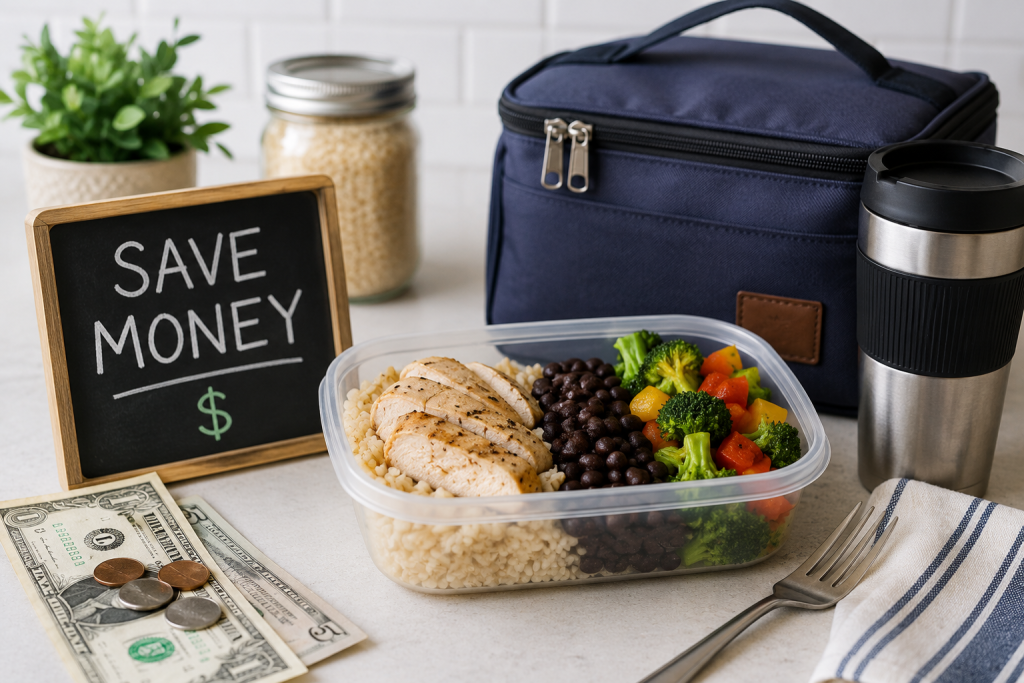
Cook chicken breast in a pan or oven with salt, pepper, garlic powder, and whatever seasonings you already have. Add cooked rice and frozen vegetables, then divide everything into containers.
For one lunch, aim for roughly:
- 4–5 ounces cooked chicken
- 1 cup cooked rice
- 1 cup mixed vegetables
- Seasoning or a small amount of sauce
Depending on the chicken price in your area, this can stay around the $3–$5 range per serving when you’re cooking several portions at once.
The chicken does most of the work when it comes to protein, while rice and vegetables turn it into an actual meal instead of just a container of meat.
This is also one of the lunches I’d make when I don’t want to think too much about meal prep. Cook a few portions, change the seasoning or sauce, and you’ve covered several workdays without making a different recipe every night.
Tip: Frozen vegetables are worth keeping around. They’re inexpensive, last much longer than fresh produce, and you can use exactly what you need without worrying about the rest going bad.
2. Black Bean, Egg, and Rice Bowl
You don’t need meat at every meal to get a decent amount of protein.
Combine cooked rice with black beans and two eggs. Add salsa, chopped tomatoes, corn, or a little shredded cheese depending on what you already have.
A basic bowl could include:
- 2 eggs
- 1 cup black beans
- 1/2 to 1 cup cooked rice
- Salsa
- Optional vegetables
Beans and eggs are both relatively inexpensive protein sources, and together they make a much more satisfying lunch than rice by itself.
This is one of those meals where buying store brands can make a noticeable difference. Canned beans are inexpensive, but dried beans can bring the cost down even further if you don’t mind cooking them ahead of time.
3. Tuna and White Bean Wrap
Tuna is useful for budget lunches because you don’t have to cook it.
Drain a can or pouch of tuna and mix it with rinsed white beans. Add a little Greek yogurt or mayonnaise, black pepper, lemon juice, and chopped celery or onion if you have them.
Spoon the mixture into a tortilla with lettuce or spinach.
You get protein from both the tuna and beans, and the beans stretch the tuna further so you don’t need to use multiple cans to make the meal filling.
For work, I’d pack the filling separately and assemble the wrap at lunchtime. It keeps the tortilla from becoming soggy after sitting in the refrigerator all morning.
4. Cottage Cheese Lunch Box
Lunch doesn’t always need to be a cooked meal.
A simple cottage cheese lunch box can include:
- 1 cup cottage cheese
- Whole-grain crackers
- Cucumber or baby carrots
- Fruit
- A hard-boiled egg
Cottage cheese is naturally protein-rich, requires zero cooking, and a larger tub is usually much cheaper per serving than buying individual snack containers.
This is especially useful for mornings when you realize you didn’t prepare anything the night before.
I’ve had enough rushed work mornings to know that having something you can put into a container in two minutes is sometimes more useful than having a great recipe that takes half an hour.
5. Lentil and Egg Bowl
Lentils deserve more attention when you’re trying to eat cheaply.
Cook a batch and portion them with two hard-boiled or fried eggs, vegetables, and a small amount of rice if you want extra carbohydrates.
Season the lentils with garlic, cumin, paprika, curry powder, or whatever you already enjoy.
Dried lentils are particularly useful because one bag produces multiple servings. They also provide both protein and fiber, which makes them a solid base for an inexpensive lunch.
This isn’t the kind of meal that’s going to look exciting in an advertisement.
But for a work lunch?
It’s inexpensive, filling, reheats well, and doesn’t require many ingredients. That’s more important to me.
6. Greek Yogurt Chicken Salad Wrap
Traditional chicken salad can become surprisingly expensive when you start adding lots of ingredients.
It doesn’t need to.
Combine leftover cooked chicken with plain Greek yogurt, a little mustard, salt, pepper, and diced celery. Put it into a tortilla or serve it with whole-grain crackers.
The Greek yogurt adds some additional protein while giving you the creamy texture you’d normally get from mayonnaise.
This is also a good way to use chicken left over from dinner rather than letting a small amount sit forgotten in the refrigerator.
When I’m trying to keep food costs down, using what I already have is just as important as finding cheap ingredients at the grocery store.
7. Black Bean and Cheese Quesadilla
A quesadilla is one of the easiest lunches to throw together.
Mash some black beans onto a tortilla, sprinkle on shredded cheese, fold it over, and cook it in a skillet until the outside is crisp and the cheese melts.
Add salsa on the side.
To increase the protein, use a generous serving of beans rather than turning it into a tortilla filled mostly with cheese.
You can also add leftover chicken if you have some from another meal.
This is a good example of why I like ingredients that can work in several different lunches. The same black beans used for the rice bowl can become quesadillas later in the week instead of forcing you to buy another set of ingredients.
8. Egg and Bean Breakfast-for-Lunch Burrito
There’s no rule saying eggs are only for breakfast.
Scramble two or three eggs and combine them with black or pinto beans, salsa, and a little cheese. Wrap everything in a tortilla.
If you’re meal prepping, make several at once and refrigerate or freeze them.
A homemade egg-and-bean burrito costs considerably less than most prepared lunch options, and the combination of eggs and beans provides a useful amount of protein without relying on expensive meat.
I especially like meals like this because they don’t feel like “budget food.” It’s just a normal lunch that happens to be inexpensive.
9. Greek Yogurt, Peanut Butter, and Fruit Bowl
Some workdays call for something lighter.
Mix plain Greek yogurt with a spoonful of peanut butter and add sliced banana or another inexpensive fruit. Sprinkle oats over the top if you want more texture and carbohydrates.
A large tub of Greek yogurt is usually much more economical than buying individual cups.
This works particularly well if you have access to a refrigerator at work and don’t want another reheated meal.
It’s simple, but that’s often exactly what I want during a busy day.
10. Leftover Chicken and Bean Wrap
This might be the most realistic meal on the entire list.
Take whatever chicken is left from dinner, add black beans, lettuce or spinach, salsa, and a tortilla.
That’s lunch.
There’s no separate recipe to cook.
And that’s something I’ve come to appreciate more when planning food around work. Not every lunch needs to start from scratch. Sometimes the cheapest and easiest lunch is simply finding a better way to use last night’s dinner.
If I cook chicken for dinner, I can intentionally make an extra portion. That takes almost no additional effort but removes one lunch decision from the next day.
The Real Trick to Keeping Lunch Under $5
The biggest mistake with budget meals is looking only at the price of individual foods.
What matters more is cost per serving.
Imagine you buy a tub of Greek yogurt for a little over $3. You’re not eating the entire tub at lunch. If it provides five servings, the yogurt portion of one meal costs well under a dollar.
The same idea applies to rice, dried beans, tortillas, oats, frozen vegetables, and larger packages of meat.
That’s why buying a few flexible ingredients usually works better than buying five completely different sets of ingredients for five lunches.
For example, chicken can become:
- Chicken and rice bowls
- Chicken salad wraps
- Quesadillas
- Leftover chicken wraps
Black beans can become:
- Rice bowls
- Burritos
- Quesadillas
- Wraps
You’re buying fewer ingredients, but you’re not necessarily eating the exact same lunch every day.
Don’t Ignore Food Waste
There’s another side of eating cheaply that I didn’t always pay enough attention to: throwing food away.
A $2 ingredient isn’t cheap if half of it ends up in the trash.
That’s one reason frozen vegetables, rice, beans, eggs, tortillas, and foods that can be frozen or used across several meals are so useful.
I try to think about what else I’ll do with an ingredient before buying it.
If I’m buying spinach for one wrap, can I put it into eggs tomorrow?
If I’m cooking chicken tonight, can I make enough for tomorrow’s lunch?
If I open a can of beans, where is the rest going?
Those little decisions don’t feel like much, but they’re what actually make a grocery budget work.
A Quick Food-Safety Reminder for Work Lunches
Meal prep only saves money if the food is stored safely.
Refrigerate cooked foods promptly and keep your lunch cold until you’re ready to eat it. If your workplace doesn’t have a refrigerator, use an insulated lunch bag with adequate cold packs for foods that need refrigeration.
Cooked leftovers generally shouldn’t sit in the refrigerator all week. A good approach is to prepare only a few days at a time and freeze additional portions when appropriate.
That also helps with another problem: eating the same meal five days in a row and being completely tired of it by Thursday.
What I’ve Learned About Cheap Work Lunches
When I first think about saving money on lunch, it’s tempting to focus on finding the absolute cheapest meal possible.
But I don’t think that’s the best goal.
A lunch that costs $2 but leaves you hungry an hour later isn’t necessarily a better choice than a $4 lunch that you actually enjoy and that gets you through the afternoon.
The sweet spot for me is simple, filling, repeatable, and inexpensive.
That’s why so many of the meals on this list use ordinary foods rather than specialty “high-protein” products. Eggs, beans, lentils, Greek yogurt, cottage cheese, chicken, and tuna aren’t particularly exciting.
They don’t need to be.
They’re ingredients you can actually build meals around.
And when work is busy, that’s the kind of healthy eating that tends to last.
Conclusion
You don’t need expensive protein bars, prepared meal-delivery bowls, or a cart full of specialty foods to put together a higher-protein lunch.
Start with basic ingredients.
Choose one or two proteins you like, add an inexpensive carbohydrate, include some fruit or vegetables, and use the same ingredients in more than one way.
Most importantly, don’t get caught up trying to hit exactly $4.37 or $4.82.
Prices change.
The better skill is learning how to look at the foods available where you shop and build a satisfying lunch for roughly $5 or less per serving.
That’s something you can keep doing even when grocery prices change.
And for a busy workweek, a lunch that’s affordable, filling, and actually realistic to prepare is a pretty good win.
Leave a Reply