Author: FuelAfterFive Team

  • Simple Grocery Staples for Easy Workweek Meals

    Grocery staples in a shopping basket for easy workweek meals

    Workweek meals often feel harder than they should. After long days, limited time, and mental fatigue, even simple cooking can seem like too much. When the right foods aren’t in the kitchen, takeout quickly becomes the default.

    That’s where simple grocery staples for easy workweek meals can change everything.

    With a short list of reliable, ready-to-use ingredients, you can build quick breakfasts, packable lunches, and low-effort dinners without starting from scratch. The goal isn’t perfection — it’s making everyday eating feel manageable.

    What Makes a Staple Worth Buying

    The best staples do at least one of three things. They save time, reduce effort, or make it easier to build a filling meal without thinking too hard.

    They’re not fancy ingredients. In fact, they’re usually the opposite. They’re dependable foods that show up again and again when people need something that works.

    Proteins That Make Meals Happen Fast

    Having ready-to-use protein in the fridge is one of the simplest ways to prevent last-minute food stress.

    Rotisserie chicken can turn into wraps, sandwiches, tacos, or quick plates in minutes. Deli turkey, smoked salmon, canned tuna, and hard-boiled eggs offer the same convenience. Greek yogurt and cottage cheese are also incredibly useful when you need something filling without cooking.

    When protein is easy, dinner becomes easier.

    Carbohydrates That Require Almost No Work

    Carbs often become complicated because people assume they need to cook them from scratch. But many good options are already ready or cook very quickly.

    Bread, tortillas, bagels, microwave rice, frozen grains, and pasta make it possible to build a meal fast. They provide energy and help simple ingredients feel complete.

    Without them, meals can feel like snacks.

    Vegetables That Save Time Instead of Creating More Work

    Vegetables don’t have to mean chopping.

    Bagged salads, pre-washed greens, baby carrots, cherry tomatoes, cucumbers, frozen vegetables, and pre-cut produce allow you to add freshness without adding another task to your night.

    When vegetables are easy to grab, you’re much more likely to eat them.

    Flavor Boosters That Make Simple Food Better

    A meal doesn’t need to be complicated, but it does need to taste good.

    Hummus, pesto, salsa, vinaigrettes, shredded cheese, olives, mustard, and seasoning blends can completely change basic ingredients. They help quick meals feel intentional rather than thrown together.

    This is often the difference between enjoying dinner and wishing you had ordered something else.

    When these foods are already in your kitchen, dinner stops being a daily puzzle. You know you can build something without a lot of thinking, and that confidence makes evenings feel better.

    It’s not about being perfect. It’s about making sure tired-you has options.

    Conclusion

    Simple grocery staples for easy workweek meals aren’t glamorous, but they are powerful. They quietly remove barriers and make it far more realistic to eat at home, even when energy is low.

    A small amount of planning at the store can save a surprising amount of stress later in the week.

    And most of the time, that’s exactly what people need.

  • What to Eat After Work When You’re Too Tired to Cook

    Easy flatbread/naan pizza for dinner when you're too tired to cook

    Some days take more out of you than you expected. By the time you walk through the door, even simple tasks can feel heavy. Cooking might technically be possible, but it doesn’t feel like something you want to do. That’s usually when dinner becomes whatever is fastest, closest, or easiest to order.

    But being too tired to cook doesn’t mean you’re out of good options.

    There are plenty of meals that require very little energy yet still leave you feeling satisfied and taken care of. The answer isn’t forcing yourself to cook something impressive. It’s choosing meals that match the energy you have left.

    Meals That Work When You’re Running on Empty

    On nights like these, dinner should feel simple, predictable, and fast. The best options rely on foods that are already prepared, heat quickly, or can be assembled with minimal thought.

    Here are reliable meals people often lean on when they’re wiped out.

    Frozen dumplings or potstickers
    Pan or steam them in minutes. Add soy sauce and you have a real dinner.

    Pasta with jarred sauce
    Boil pasta, heat sauce, maybe throw in spinach. Comfort food without the complexity.

    Microwave baked potato
    Split it open and top with cheese, Greek yogurt or sour cream, maybe some leftover meat or beans.

    Rotisserie chicken tacos
    Tortillas, chicken, salsa, maybe avocado. Done.

    Sandwich and a side
    Deli meat, cheese, mustard, greens. Pair it with chips, fruit, or yogurt.

    Cottage cheese toast
    Toast, cottage cheese, drizzle of olive oil or everything seasoning, maybe tomatoes.

    Eggs and toast
    Scrambled or fried, done in minutes. Add fruit if you want something fresh.

    Charcuterie-style plate
    Crackers, cheese, deli meat, nuts, fruit. Assembly only.

    Flatbread or naan pizza
    Store-bought flatbread, jarred sauce, cheese, into the oven for a few minutes.

    Instant ramen upgraded
    Add a soft-boiled egg, frozen spinach, or leftover protein to make it more complete.

    None of these meals are fancy.

    They’re designed to work when you don’t want to.

    Give Yourself Permission to Keep It Simple

    When you’re tired, the goal is not culinary achievement. The goal is feeding yourself in a way that doesn’t create more stress.

    Simple meals are often more sustainable than ambitious ones. They help you stay consistent, save money, and avoid the cycle of feeling defeated at the end of the day.

    Good enough is powerful.

    Conclusion

    Remember, a little preparation at the grocery store can remove a lot of pressure later. Knowing what to eat after work when you’re too tired to cook can make evenings feel better. Instead of debating, delaying, or defaulting to takeout, you already have a plan.

    When dinner asks less from you, it becomes much easier to take care of yourself — even on the hardest days.

  • Work Lunches You Can Pack in Under 5 Minutes

    Some mornings move fast.

    You’re getting dressed, checking the time, looking for your keys, thinking about the day ahead. In the middle of all that, packing lunch can feel like one more task you simply don’t have the space for.

    That’s usually when food gets skipped or replaced with whatever is easiest to grab later.

    But lunch doesn’t have to be complicated to be good. In fact, the meals that tend to work best during busy weeks are often the simplest ones — the kind you can throw together almost without thinking.

    When ingredients are ready and expectations are realistic, five minutes is more than enough.

    Packing something quickly might not feel exciting, but it’s incredibly reliable. When lunch takes almost no effort, you’re far more likely to bring it. And bringing something simple is usually better than scrambling to figure food out later.

    10 Work Lunches You Can Throw Together in Minutes

    These are real-life meals. They rely on everyday ingredients and require very little energy. Think assembly, not production.

    Turkey and hummus wrap
    Spread hummus on a tortilla, layer in deli turkey and a handful of greens, roll it up, and you’re done.

    Greek yogurt with granola and fruit
    Scoop yogurt into a container, add granola, top with berries or a banana.

    Rotisserie chicken sandwich
    Bread, chicken, mustard, maybe cheese or spinach. Simple and dependable.

    Tuna with crackers and vegetables
    A tuna packet, a sleeve of crackers, baby carrots or cucumbers. No prep needed.

    Leftovers from last night
    Possibly the fastest lunch of all. If dinner worked, lunch will too.

    Peanut butter and banana sandwich
    Quick, filling, and surprisingly hard to beat.

    Salad kit with added protein
    Open the bag, toss in chicken, beans, or tofu, seal it back up, shake.

    Cottage cheese with fruit and nuts
    High in protein, refreshing, and ready in seconds.

    Hard-boiled eggs with toast
    Add an apple or a handful of cherry tomatoes and you’re set.

    Protein smoothie
    Milk or yogurt, fruit, oats or nut butter, maybe protein powder. Blend and go.

    None of these need to be perfect. They just need to be there when you get hungry.

    Keep Ingredients That Make Fast Possible

    Stocking foods that are easy to grab is half the battle. Wraps, bread, yogurt, deli meat, fruit, pre-washed greens — these are the quiet heroes of quick mornings.

    When they’re in your fridge, lunch is rarely more than a few steps away.


    Conclusion

    Work lunches you can pack in under five minutes aren’t meant to impress anyone. They’re meant to make busy days run more smoothly.

    When you leave the house knowing lunch is handled, you remove one decision from the day ahead. And sometimes, that small bit of relief is exactly what makes everything else feel more manageable.

  • Low-Effort Dinners for Exhausting Workdays

    Some evenings are simple. Many are not.

    After a long workday, energy is limited and motivation is low. Cooking can feel like one more responsibility in a day that already asked too much of you. That’s often when takeout becomes the easiest answer.

    Low-effort dinners are not about cutting corners. They’re about working with the energy you actually have at the end of the day.. When meals are quick, familiar, and require very little thought, it becomes much easier to eat at home without adding stress or frustration to the evening.

    Why Dinner Feels Harder Than It Should

    By the time dinner comes around, most people have already used up their decision-making energy. Work, commuting, conversations, and responsibilities leave very little mental space for planning or cooking.

    Even simple meals can feel complicated in that state. If food requires multiple steps, extra cleanup, or long cooking times, it often feels easier to order something instead.

    The answer usually isn’t trying harder. It’s making dinner require less from you.

    Low-Effort Dinners You Can Put Together Fast

    The most reliable weeknight meals rely on ingredients that are ready to use. Instead of cooking everything from scratch, you build dinner from parts that come together quickly and still feel complete.

    10 Low-Effort Dinners You Can Make Fast

    The best low-effort dinners rely on ingredients that are ready to use. They come together quickly, fill you up, and don’t leave a mess behind.

    Here are reliable options many people return to again and again:

    1. Rotisserie chicken wrap
    Chicken, bagged greens, hummus or mustard, wrapped in a tortilla. Done in minutes.

    2. Rice bowl with pre-cooked protein
    Microwave rice, grilled chicken or tofu, frozen vegetables, bottled sauce (Teriyaki, Soy Sauce, Pesto, salsa, Vinigrette)

    3. Eggs on toast with fruit
    Fried or scrambled eggs, whole-grain toast, apple or berries on the side.

    4. Turkey and cheese sandwich with veggies
    Deli turkey, sliced cheese, tomatoes, cucumbers, mustard, plus baby carrots or chips.

    5. Greek yogurt bowl
    Greek yogurt, granola, fruit, nut butter. Filling, fast, minimal cleanup.

    6. Pasta with store-bought pesto
    Boil pasta, stir in pesto, add spinach or cherry tomatoes.

    7. Loaded hummus plate
    Hummus, pita, olives, cucumbers, tomatoes, maybe leftover chicken.

    8. Quesadillas
    Tortilla, shredded cheese, beans or chicken. Pan for a few minutes.

    9. Salad kit plus protein
    Use the bagged salad, add rotisserie chicken, tuna, or chickpeas.

    10. Breakfast-for-dinner smoothie
    Milk, protein powder or yogurt, banana, oats, peanut butter.

    None of these are fancy.
    That’s the point.

    They remove extra effort on nights when energy is gone.

    Make Peace With Repeating What Works

    On tired nights, novelty matters less than knowing a meal will do its job.

    If something fills you up, tastes good, and requires very little effort, it’s perfectly reasonable to eat it multiple times during the week. Familiar meals reduce thinking and make dinner feel automatic.

    That reliability can be the difference between eating at home and opening an app.

    Lower the Bar on Purpose

    Dinner doesn’t need to be impressive. It needs to be good enough.

    A simple meal eaten consistently often supports your energy, sleep, and budget better than ambitious cooking that only happens once in a while. When expectations are realistic, follow-through becomes much easier.

    And consistency is what actually makes life feel more manageable.

    Conclusion

    Low-effort dinners for exhausting workdays aren’t elaborate, and they don’t need to be. They exist to make evenings smoother when time and energy are in short supply.

    When meals are quick, dependable, and easy to repeat, eating at home becomes far more realistic. Over time, those small, manageable choices can make busy weeks feel lighter and more under control.

  • Healthy Foods That Make Workdays Feel Easier (Not Heavier)

    What you eat during the workday has a direct effect on how the day feels. Some meals leave you steady, focused, and comfortable. Others make you sluggish, distracted, or ready for a nap by mid-afternoon.

    Eating well at work isn’t about perfection or strict rules. It’s about choosing foods that support your energy instead of draining it. When meals are balanced and easy to digest, the entire workday tends to run more smoothly.

    First, Why Some Meals Slow You Down

    Heavy, overly rich, or unbalanced meals can work against you. Large portions, high amounts of refined carbohydrates, or meals that lack protein often lead to energy dips later in the day.

    Digestion takes effort. When meals are very large or difficult to process, you might notice tiredness, brain fog, or a drop in motivation. This helps explain why fast, convenient foods can feel satisfying in the moment but harder to recover from later.

    The goal isn’t to eat tiny meals either. It’s to eat meals that are satisfying without overwhelming you.

    What Lighter, More Supportive Meals Include

    Meals that make workdays feel easier usually share a simple structure. They contain protein for staying power, carbohydrates for fuel, and vegetables or fiber for balance. They’re filling, but not excessive.

    Protein is especially important during the day. It helps you stay full longer and prevents the kind of hunger rebound that leads to vending machine trips later. Foods like grilled chicken, tuna, salmon, eggs, Greek yogurt, tofu, or beans all work well and pair easily with grains, wraps, or salads.

    Carbohydrates also play a key role. Rice, quinoa, potatoes, oats, whole-grain breads, and fruit provide energy your brain and body need to stay productive. When combined with protein, they help maintain steady focus instead of sharp spikes and crashes.

    Vegetables round everything out. They add volume, hydration, and nutrients while keeping meals comfortable. Leafy greens, cucumbers, tomatoes, carrots, and peppers can make even simple meals feel fresher and easier to eat.

    How This Looks in Real Life

    In practice, supportive meals are usually simple. A bowl with rice, chicken, and vegetables. A wrap filled with turkey, hummus, and greens. Yogurt with fruit and granola. These meals aren’t complicated, but they consistently help people feel better during long days.

    The best options are often the ones you can repeat without much effort. When meals are reliable, you spend less time worrying about food and more time focusing on your responsibilities.

    Sometimes the most useful question isn’t whether a meal is perfect, but whether it helps you feel good enough to do your job well.

    Conclusion

    Healthy foods that make workdays feel easier aren’t special or elaborate. They’re simply meals that provide steady energy, include enough protein, and avoid overwhelming your system.

    When you build meals with comfort and balance in mind, work tends to feel smoother. You think more clearly, stay more consistent, and avoid the slump that makes long days harder than they need to be.

  • A Simple Workweek Eating Plan for People Who Hate Meal Prep

    Meal prep sounds great in theory. In reality, not everyone wants to spend hours cooking and portioning meals for the entire week. For many people, that kind of structure feels overwhelming or unsustainable.

    If you hate meal prep but still want to eat better during the workweek, the answer isn’t more planning — it’s simpler planning. A flexible eating plan that works with busy schedules, low energy, and real life can make eating well feel far more manageable.

    Why Traditional Meal Prep Doesn’t Work for Everyone

    Traditional meal prep asks a lot upfront. It requires time, energy, and motivation — usually on a weekend when you might already be tired. For people who don’t enjoy cooking or get bored eating the same meals, this approach often leads to burnout.

    The problem isn’t a lack of discipline. It’s that the system doesn’t fit how many people actually live and eat during the workweek.

    A simpler approach focuses less on prepping everything in advance and more on reducing daily effort.

    What a “No-Meal-Prep” Eating Plan Really Looks Like

    A realistic workweek eating plan doesn’t rely on perfectly packed containers. Instead, it uses repetition, easy foods, and basic structure to make decisions easier throughout the week.

    The goal is to answer the question, “What am I going to eat today?” without having to think too hard about it.

    That means keeping meals flexible, using foods that require little preparation, and allowing variety without extra work.

    Rather than assigning exact meals to every day, it helps to think in categories.

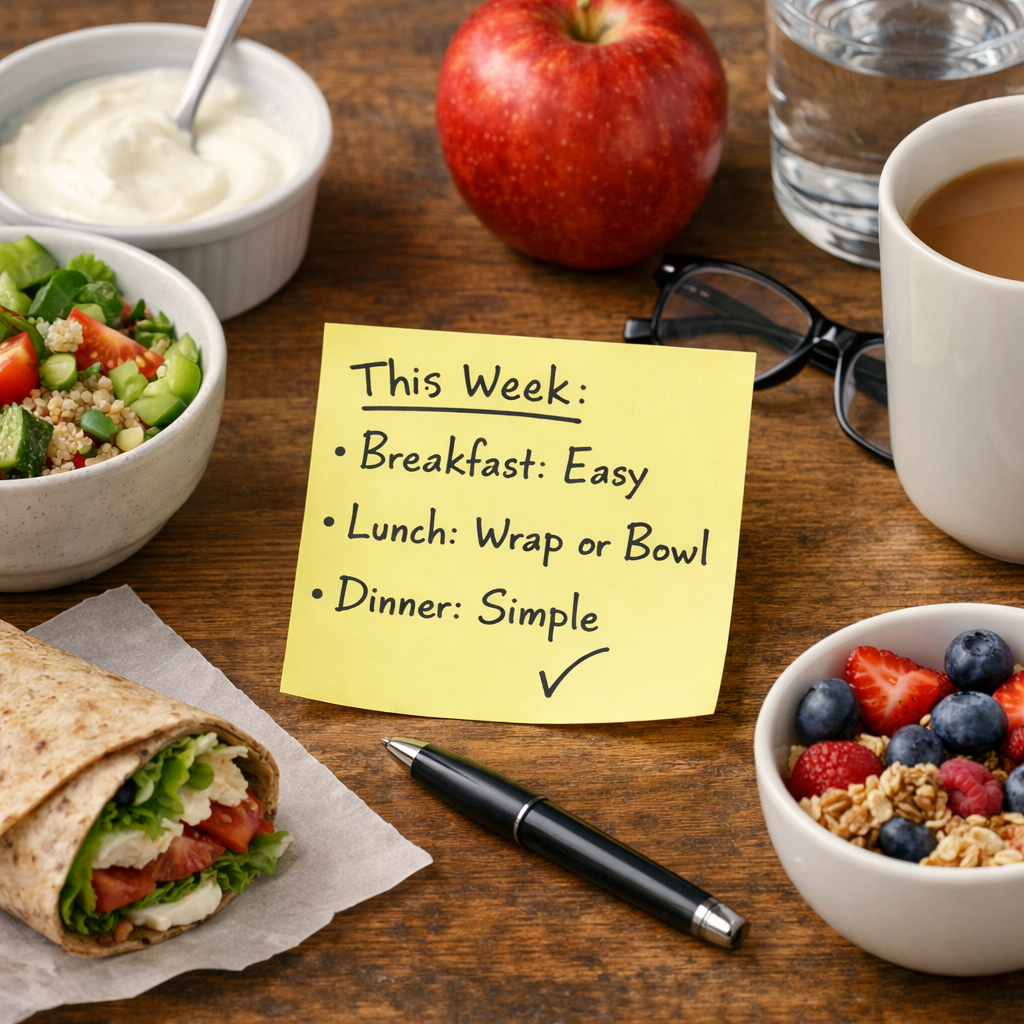
    Breakfast stays simple and repeatable. Lunch relies on foods that pack easily or can be eaten cold. Dinner focuses on low-effort options that don’t require much cooking or cleanup.

    This approach keeps structure without feeling restrictive.

    Easy Breakfasts You Can Repeat All Week

    Breakfast is the easiest meal to simplify. Eating the same thing most mornings saves time and mental energy.

    Options like yogurt with fruit, eggs with toast, smoothies, or overnight oats require little effort and can be adjusted slightly for variety. When breakfast is predictable, the rest of the day feels easier to manage.

    Low-Effort Lunches That Don’t Feel Like Meal Prep

    Lunch doesn’t need to be complicated to be satisfying. Meals that can be assembled quickly or eaten cold work especially well during the workweek.

    Wraps with protein and vegetables, grain bowls made from pre-cooked ingredients, sandwiches, or salads built from ready-to-eat components all fit this approach. These meals don’t require full prep sessions — just simple assembly.

    Keeping a few reliable lunch options on rotation removes the daily guesswork.

    Dinners That Don’t Require Cooking Every Night

    Dinner is often where people rely on takeout the most. That’s usually because cooking after a long day feels like too much.

    Instead of planning full dinners every night, it helps to mix in shortcuts. Some nights might involve assembling a quick meal from leftovers or pre-cooked ingredients. Other nights might be simple, no-cook meals or light dinners that don’t require much effort.

    Not every dinner needs to be hot, elaborate, or time-consuming to be satisfying.

    Build in Flexibility Without Losing Structure

    A simple workweek eating plan works best when it allows room for flexibility. This might mean planning for one takeout night or keeping easy backup foods on hand for especially busy days.

    When flexibility is built in, it’s easier to stay consistent without feeling restricted or frustrated.

    Why This Approach Actually Works

    This style of eating works because it lowers the barrier to eating well. Instead of relying on motivation or perfect planning, it focuses on making food decisions easier during the busiest parts of the week.

    By keeping meals simple, repeatable, and flexible, eating well becomes something you can maintain — even if you hate meal prep.


    You don’t need to love meal prep to eat well during the workweek. You just need a plan that fits your lifestyle, energy level, and schedule.

    A simple workweek eating plan built around easy foods and low-effort meals can help you stay consistent without turning food into another chore. When eating well feels manageable, it’s much easier to stick with over time.

  • Healthy Food Shortcuts That Save Time During the Workweek

    Eating well during the workweek often feels harder than it should. Not because healthy food is complicated, but because time is limited and energy runs out quickly. When schedules are packed, even small obstacles can make eating at home feel unrealistic.

    That’s where food shortcuts come in. Healthy shortcuts aren’t about cutting corners or sacrificing quality. They’re about removing unnecessary steps so eating well fits into a busy workweek instead of competing with it.


    Use Pre-Prepared Ingredients on Purpose

    Pre-prepared foods often get a bad reputation, but they can be one of the biggest time savers during the workweek.

    Rotisserie chicken, pre-cooked grains, washed greens, and frozen vegetables cut preparation time dramatically. These foods still offer real nutrition, just without the extra work. Using them intentionally makes it possible to build full meals in minutes instead of skipping meals or relying on takeout.

    The goal isn’t to cook everything from scratch. It’s to get food on the table consistently.

    Repeat Meals to Save Time and Mental Energy

    Variety sounds appealing, but during busy weeks it often creates more work. Deciding what to eat every day adds mental strain after a long workday.

    Repeating meals reduces that burden. Eating the same breakfast or lunch several days in a row saves time, simplifies grocery shopping, and removes daily decision-making. This doesn’t mean eating boring food forever — it just means making busy weeks easier to manage.

    Consistency beats variety when time is limited.

    Build Meals Around Simple Templates

    Healthy meals don’t need to be reinvented every night. Simple templates make meal building faster and more reliable.

    A basic structure like protein, vegetables, and a carbohydrate works in almost any combination. Once you have that structure in mind, meals come together quickly without much thought. This approach also makes grocery shopping easier because you’re buying familiar ingredients that work in multiple meals.

    Templates turn cooking into assembly instead of a project.

    Keep Backup Foods Ready at All Times

    Busy workweeks are unpredictable, which makes backup foods essential. These are the foods you rely on when plans fall apart or energy runs low.

    Keeping easy options on hand — like wraps, cold meals, or no-cook combinations — helps prevent last-minute food decisions. Backup foods don’t need to be exciting. They just need to work when nothing else does.

    Having a plan for low-energy days makes healthy eating more consistent.

    Use Shortcuts That Reduce Cleanup

    Cleanup is often the hidden reason people avoid cooking. The thought of dishes can be just as draining as cooking itself.

    One-pan meals, sheet-pan cooking, and simple bowls reduce cleanup and make meals feel more manageable. Even using disposable parchment or foil during especially busy weeks can help remove another barrier to eating at home.

    Less cleanup means less resistance.

    Think in Terms of Time Saved, Not Perfection

    Healthy food shortcuts aren’t about doing everything the “right” way. They’re about doing things in a way that works during real workweeks.

    If a shortcut saves time and helps you eat at home more often, it’s doing its job. Small efficiencies add up, especially when they remove stress instead of adding it.

    Progress during busy weeks comes from practicality, not perfection.


    Eating well during the workweek doesn’t require more motivation or longer cooking sessions. It requires systems that save time and reduce effort when life is busy.

    Healthy food shortcuts make eating at home easier, more consistent, and far less stressful. When food fits into your schedule instead of fighting it, healthy habits become much easier to maintain over time.

  • How to Stop Relying on Takeout During Busy Workweeks

    Busy workweeks often change how we eat. When schedules are packed and energy is limited, food decisions tend to become reactive rather than intentional. Takeout becomes the default not because it’s ideal, but because it’s convenient and requires very little effort at the end of a long day.

    Learning how to rely less on takeout isn’t about cooking elaborate meals or having more discipline. It’s about setting up simple systems that make eating at home easier and more realistic during demanding weeks.


    Why Takeout Becomes the Default

    Takeout works because it solves several problems at once. It saves time, reduces decision-making, and delivers food right when hunger hits. After a full workday, that convenience is hard to replace.

    Most people rely on takeout not because they prefer restaurant food every night, but because they didn’t plan for a low-effort alternative. When there’s no food ready and no energy to cook, takeout fills the gap.

    Understanding this shifts the focus away from discipline and toward preparation.

    Plan for Realistic Weeks, Not Ideal Ones

    A common mistake is planning meals around an ideal schedule. It’s easy to assume you’ll cook regularly or have time to prepare food after work. In reality, busy weeks rarely allow for that.

    Planning for simple, low-effort meals makes a bigger difference than planning elaborate dinners. Meals that take little time, require minimal cleanup, or can be eaten cold tend to work best when schedules are unpredictable.

    When your food plan reflects how your week actually looks, it becomes easier to stick with it.

    Make Eating at Home Convenient

    If takeout feels faster and easier, it will naturally win. To rely on it less, eating at home needs to feel just as convenient.

    Keeping simple proteins, ready-to-eat vegetables, and basic carbohydrates on hand allows meals to come together quickly. Having food that is already prepared or partially ready reduces the effort required at the end of a long day.

    Convenience matters more than variety during busy workweeks.

    Use Backup Meals Instead of Motivation

    Busy weeks benefit from reliable backup meals. These are meals that don’t require much thought and work even when energy is low.

    A wrap with protein and vegetables, a cold grain bowl, or a simple no-cook meal can serve this role. Having a few dependable options reduces the temptation to order takeout simply because cooking feels overwhelming.

    Consistency matters more than excitement when time is limited.

    Reduce Decision Fatigue Around Food

    After making decisions all day, choosing what to eat can feel exhausting. This mental fatigue often leads people to default to takeout.

    Reducing choices helps. Repeating meals, rotating a small list of go-to options, or planning meals ahead of time can make eating feel more automatic.

    When food decisions require less thought, it’s easier to follow through with eating at home.

    Keep Takeout as a Planned Option

    Completely avoiding takeout isn’t always realistic. Trying to eliminate it entirely can turn food into an all-or-nothing situation.

    Instead, decide in advance when takeout makes sense. Planning for it removes guilt and helps prevent it from becoming the default choice every night.

    This approach allows flexibility without letting takeout take over the week.


    Reducing reliance on takeout during busy workweeks isn’t about cooking more or having more discipline. It’s about setting up food options that work when time and energy are limited.

    When eating at home feels practical and easy, takeout naturally becomes less necessary. Small changes in planning and preparation can make a meaningful difference over time.

  • Healthy Meals You Can Eat Cold Without Reheating

    Whether you’re eating at work, traveling, or getting home late, there are plenty of healthy meals you can eat cold without reheating that still feel complete. When you choose the right combinations, cold meals can be filling, balanced, and easy to rely on — without feeling like you’re settling for snacks.

    The key is building meals with enough protein, real carbohydrates, vegetables, and flavor so they actually satisfy you.


    Why Cold Meals Make Life Easier

    Cold meals simplify eating. There’s no reheating, no waiting, and no relying on a microwave, which makes them easier to fit into busy or unpredictable days. When packed properly and kept cold, they’re also practical and reliable for work or travel. Most importantly, cold meals remove extra steps, making it more likely you’ll actually eat a full, balanced meal instead of skipping food or grabbing something random

    What Makes a Cold Meal Feel Like a Real Meal

    A real cold meal needs structure. Protein keeps you full. Carbohydrates provide energy. Vegetables add volume and nutrition. Flavor matters just as much as anything else.

    Spreads, dressings, and simple seasonings prevent cold meals from tasting flat. When all of these pieces are present, the meal feels intentional rather than rushed or incomplete.

    Protein-Based Cold Meals That Hold Up Well

    Protein is the foundation of a satisfying cold meal, and certain proteins work especially well without heat.

    One example is sliced rotisserie or grilled chicken paired with whole-grain bread, roasted red peppers, cucumbers, and a light spread like hummus or pesto. This kind of meal eats well cold and still feels substantial.

    Tuna mixed with olive oil, lemon, and a bit of Dijon mustard can be served over cooked rice or quinoa with cherry tomatoes, chopped spinach, and cucumbers. It’s filling, flavorful, and holds up well in the fridge.

    Salmon also works surprisingly well cold. Flaked cooked salmon over rice with avocado, shredded carrots, and a light yogurt-based dressing creates a balanced meal that doesn’t need reheating.

    Hard-boiled eggs can be the protein base of a full meal when paired with roasted potatoes eaten cold, fresh greens like arugula or spinach, and a simple vinaigrette. This turns eggs into a complete, filling option rather than a snack.

      Wraps and Sandwiches That Feel Like Proper Meals

      Wraps and sandwiches are some of the easiest ways to build cold meals that feel complete.

      A turkey and cheese wrap with romaine lettuce, sliced tomatoes, cucumbers, and a spread like mashed avocado or mustard makes a solid lunch that doesn’t rely on heat. Adding whole-grain wraps or bread helps it feel more filling.

      Chicken salad made with Greek yogurt, celery, red onion, and herbs can be served in a wrap or on whole-grain bread with leafy greens. This kind of meal is designed to be eaten cold and still tastes good hours later.

      Egg salad made with Greek yogurt or light mayo, paired with spinach and tomatoes on bread, works the same way. It’s filling, familiar, and easy to eat anywhere.

      Cold Bowls and Salads That Eat Like Meals

      Cold bowls and salads work best when they’re built with heartier ingredients.

      A quinoa bowl with grilled chicken, roasted sweet potatoes eaten cold, spinach, and a simple olive oil and lemon dressing makes a full meal that holds up well in the fridge. Pasta salads with whole-grain pasta, chicken, cherry tomatoes, cucumbers, and vinaigrette are another option that stays satisfying without reheating.

      Chickpea salads mixed with olive oil, red onion, tomatoes, and herbs can be paired with rice or bread to make them more filling. Grain bowls made with rice or farro, protein, vegetables, and dressing are especially useful for work lunches.

      No-Cook Meals That Are Still Full Meals

      Even without cooking, it’s possible to put together cold meals that feel complete.On especially busy days, having a few healthy no-cook meals for work ready can make it much easier to eat a full meal without relying on a microwave.

      A bowl of Greek yogurt paired with granola, fruit, and nut butter becomes a full meal rather than a snack when the portions are right. A smoothie made with protein powder, frozen fruit, oats, and nut butter can also function as a meal when you need something quick and filling.

      Wraps made ahead with deli turkey, cheese, lettuce, tomatoes, and a spread like hummus or mustard are another example of no-cook meals that still provide enough substance to carry you through the day.


      Healthy meals don’t need to be hot to be satisfying. When built with real ingredients, cold meals can be balanced, filling, and easy to stick with — even on the busiest days.

      If reheating food feels like a hassle, keeping a short list of healthy meals you can eat cold without reheating can make eating well far more manageable.

      Sometimes the simplest meals are the ones that work best.

    1. What to Eat When You Get Home Late and Don’t Want a Full Dinner

      Getting home late has a way of throwing everything off. You’re tired, maybe a little hungry, but the idea of cooking a full dinner — or eating something heavy — just doesn’t sound appealing.

      This happens a lot after long workdays, late commutes, workouts, or packed schedules — especially if you already struggle with finding healthy meal ideas after work. And the truth is, you don’t always need a full sit-down meal to feel satisfied. Sometimes, something lighter and simpler is exactly what your body wants.

      The key is knowing what to eat so you don’t go to bed starving — or overly full.


      Why Heavy Dinners Don’t Feel Great Late at Night

      Eating a large, heavy meal late in the evening can leave you feeling uncomfortable. Many people notice that big dinners close to bedtime can affect sleep, digestion, and how they feel the next morning.

      When you’re already tired, your body usually isn’t asking for a big plate of food — it’s asking for just enough to feel settled. That’s why lighter options often work better when you get home late.

      This doesn’t mean skipping food entirely. It just means choosing something that’s easy to eat and easy to digest.

      What to Eat Instead of a Full Dinner

      When you don’t want a traditional dinner, think in terms of simple combinations rather than full meals.

      A small amount of protein, something light for energy, and maybe one comforting item is usually enough.

      Light protein options

      Protein helps you feel satisfied without needing a large portion:

      • Greek yogurt or cottage cheese
      • Eggs (boiled, scrambled, or on toast)
      • A small wrap with turkey or chicken
      • Protein smoothie or shake

      You don’t need much — even a modest serving can do the job.


      Simple carbs (small portions)

      Carbs don’t have to be heavy to be helpful:

      • Toast or half a sandwich
      • Crackers with hummus
      • A small bowl of cereal
      • Rice cakes or a wrap

      The goal is comfort, not a full plate.


      Easy add-ons

      These round things out without overdoing it:

      • Fruit
      • Soup or broth
      • Peanut butter or nut butter
      • Cheese

      Mix and match based on what you already have.

      No-Cook and Low-Effort Ideas

      On nights like this, convenience matters. If you’re already home late, keeping things simple makes it easier to eat something instead of nothing.

      Some nights, having a few healthy no-cook meal ideas ready can make all the difference — especially when your energy is gone but your stomach isn’t.

      Examples:

      • Yogurt with fruit
      • A wrap with deli meat and greens
      • Smoothie with protein and frozen fruit
      • Crackers with cheese and a piece of fruit

      If you’re looking for more ideas like this, having a small list of quick, low-effort options can save you from defaulting to snacks that don’t really satisfy.

      When a Snack Is Actually Enough

      It’s okay to admit that sometimes you don’t need a “real” dinner.

      If you’re only mildly hungry, a snack-style meal can be the right call. Eating something light is better than forcing yourself to eat more than you want — or skipping food altogether and waking up hungry later.

      Pay attention to how you feel:

      • Slight hunger → light snack or small meal
      • Moderate hunger → simple protein + carb
      • Very hungry → something a little more filling, but still easy

      There’s no rule that says dinner has to look the same every night.


      When you get home late and don’t want a full dinner, the best choice is often the simplest one. Light meals, quick combinations, and low-effort options can help you feel satisfied without feeling weighed down.

      You don’t need a perfect plate or a long recipe. You just need something that works for that moment.

      Listening to your body and keeping things flexible makes late nights a lot easier — and a lot more sustainable.