Meal prep sounds great in theory. In reality, not everyone wants to spend hours cooking and portioning meals for the entire week. For many people, that kind of structure feels overwhelming or unsustainable.
If you hate meal prep but still want to eat better during the workweek, the answer isn’t more planning — it’s simpler planning. A flexible eating plan that works with busy schedules, low energy, and real life can make eating well feel far more manageable.
Why Traditional Meal Prep Doesn’t Work for Everyone
Traditional meal prep asks a lot upfront. It requires time, energy, and motivation — usually on a weekend when you might already be tired. For people who don’t enjoy cooking or get bored eating the same meals, this approach often leads to burnout.
The problem isn’t a lack of discipline. It’s that the system doesn’t fit how many people actually live and eat during the workweek.
A simpler approach focuses less on prepping everything in advance and more on reducing daily effort.
What a “No-Meal-Prep” Eating Plan Really Looks Like
A realistic workweek eating plan doesn’t rely on perfectly packed containers. Instead, it uses repetition, easy foods, and basic structure to make decisions easier throughout the week.
The goal is to answer the question, “What am I going to eat today?” without having to think too hard about it.
That means keeping meals flexible, using foods that require little preparation, and allowing variety without extra work.
Rather than assigning exact meals to every day, it helps to think in categories.
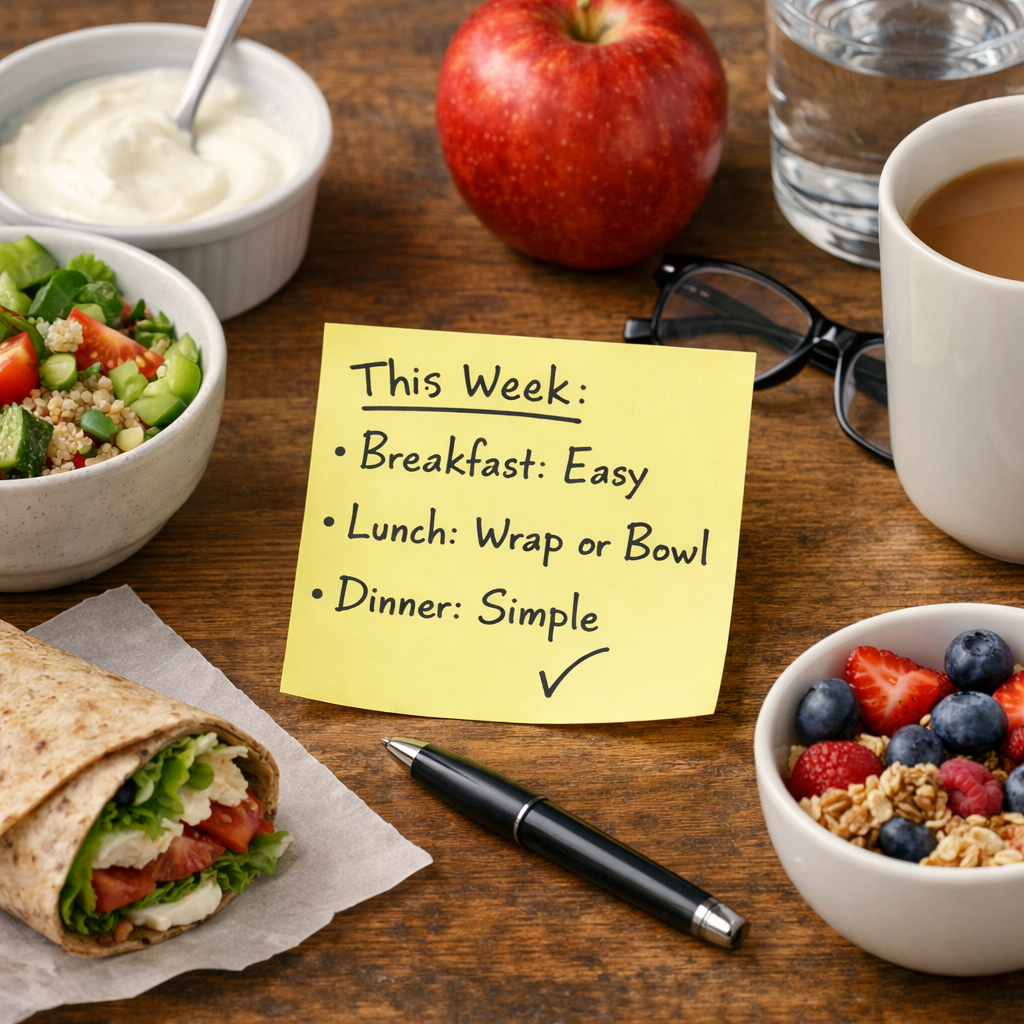
Breakfast stays simple and repeatable. Lunch relies on foods that pack easily or can be eaten cold. Dinner focuses on low-effort options that don’t require much cooking or cleanup.
This approach keeps structure without feeling restrictive.
Easy Breakfasts You Can Repeat All Week
Breakfast is the easiest meal to simplify. Eating the same thing most mornings saves time and mental energy.
Options like yogurt with fruit, eggs with toast, smoothies, or overnight oats require little effort and can be adjusted slightly for variety. When breakfast is predictable, the rest of the day feels easier to manage.
Low-Effort Lunches That Don’t Feel Like Meal Prep
Lunch doesn’t need to be complicated to be satisfying. Meals that can be assembled quickly or eaten cold work especially well during the workweek.
Wraps with protein and vegetables, grain bowls made from pre-cooked ingredients, sandwiches, or salads built from ready-to-eat components all fit this approach. These meals don’t require full prep sessions — just simple assembly.
Keeping a few reliable lunch options on rotation removes the daily guesswork.
Dinners That Don’t Require Cooking Every Night
Dinner is often where people rely on takeout the most. That’s usually because cooking after a long day feels like too much.
Instead of planning full dinners every night, it helps to mix in shortcuts. Some nights might involve assembling a quick meal from leftovers or pre-cooked ingredients. Other nights might be simple, no-cook meals or light dinners that don’t require much effort.
Not every dinner needs to be hot, elaborate, or time-consuming to be satisfying.
Build in Flexibility Without Losing Structure
A simple workweek eating plan works best when it allows room for flexibility. This might mean planning for one takeout night or keeping easy backup foods on hand for especially busy days.
When flexibility is built in, it’s easier to stay consistent without feeling restricted or frustrated.
Why This Approach Actually Works
This style of eating works because it lowers the barrier to eating well. Instead of relying on motivation or perfect planning, it focuses on making food decisions easier during the busiest parts of the week.
By keeping meals simple, repeatable, and flexible, eating well becomes something you can maintain — even if you hate meal prep.
You don’t need to love meal prep to eat well during the workweek. You just need a plan that fits your lifestyle, energy level, and schedule.
A simple workweek eating plan built around easy foods and low-effort meals can help you stay consistent without turning food into another chore. When eating well feels manageable, it’s much easier to stick with over time.
Leave a Reply